Thursday, May 23, 2013

TOP MODEL!


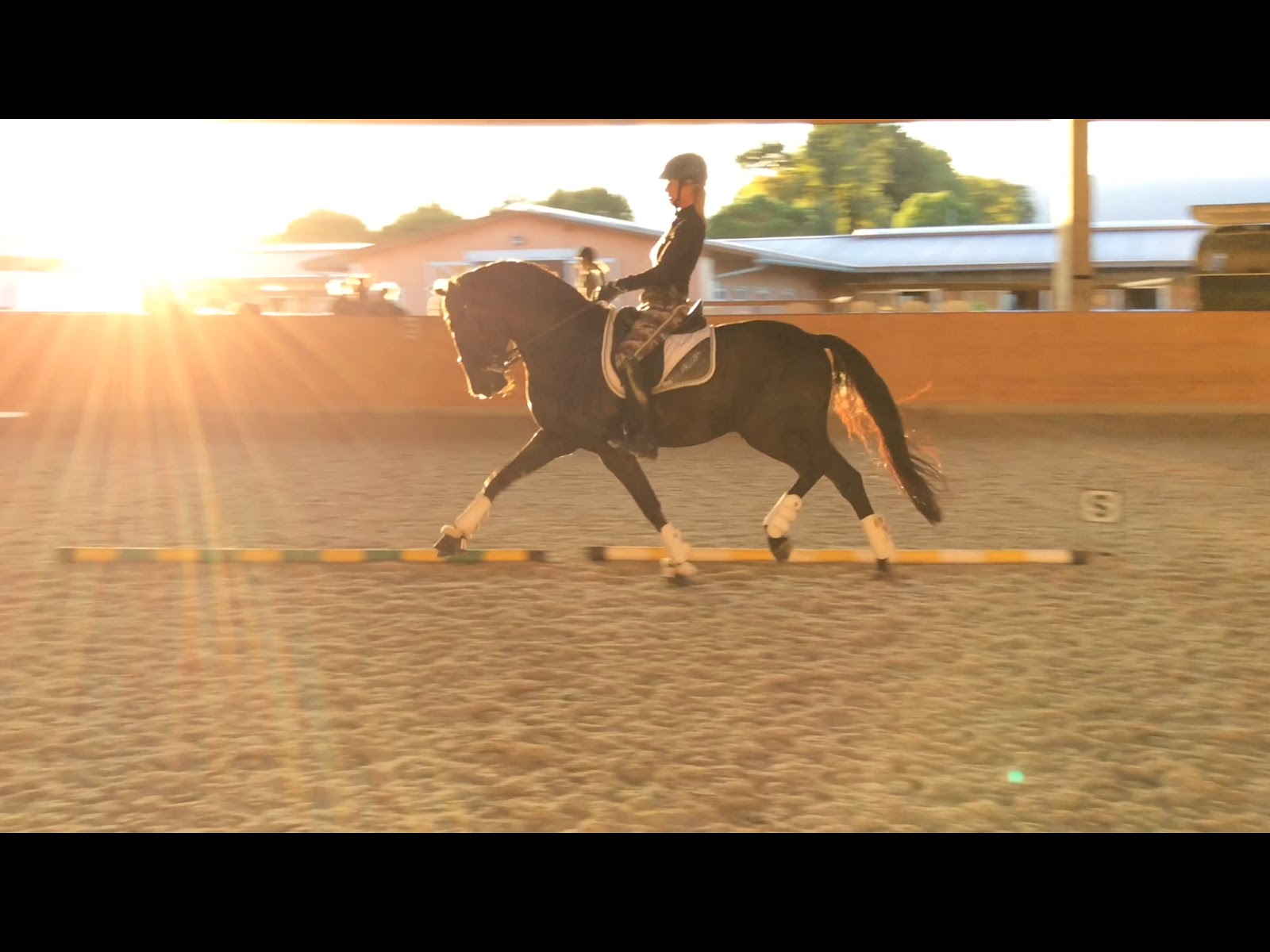
Some weeks ago I was approached by the owner my stables asking me whether I’d be okay with Qrac taking part in a fashion photo-shoot with FĂ©mina, a Swiss magazine. The magazine had called him the previous day to talk about the project; the photo-shoot would have an equestrian theme, and they needed to a couple of nice horses for their model to pose with. 

I love fashion magazines, so was excited and agreed immediately.

So, a few weeks later the photographic crew arrived. They were incredibly lucky with the weather as they got one of the few sunny days we’ve had since, well, I don’t know when. The weather has been atrocious since last October over here in Switzerland. It’s almost June, yet the forecast for this coming weekend is snow down to 700 metres, with rain and wind and shivery temperatures for everyone below. Yippedy skippedy. And I have a show on Saturday. But that will be another exciting tale to tell!

Anyway, the crew settled into the saddle/coffee room of the stables and spent the first three hours or so doing the model’s makeup and hair. Then they went outside and took some photos of her looking all pouty and seductive while leaning against the barn door, a saddle by her side. Again, this took forever; I’d already had time to ride Qrac, clean my tack, and down umpteen cups of coffee before they were even close to ready to move on to photographing the model with my horse.

But eventually it was Qrac’s turn to face the camera. I was a little concerned he might be worried about the giant light reflectors and other photographic paraphernalia the crew was lugging around; I’ve mentioned before that he’s not the bravest horse on the planet, but the only eyelids batting were the model’s. Qrac seemed to enjoy posing with this pretty young blonde, and I was very proud of him.

The editorial finally came out the weekend before last, and I got a real kick out of opening the magazine and seeing my horse looking absolutely fabulous!

Don’t you think he looks handsome?! Have your horses ever been photographed for a magazine or an advertisement for something?


Wednesday, May 22, 2013

My Life With Horses--Part 2


                                               by Laura Crum

            As I said in my last post (My Life With Horses), I bought a bay horse named Burt when I was about twenty-one because he looked like the horse I had idealized in my childhood-- Mr Softime. I had just sold a horse named Hobby and I actually meant to take a break from owning horses, but I went to look at some Queensland Heeler puppies with a friend who wanted a pup, and the first thing I saw when we drove up to the ranch house was this bright bay gelding who looked just like Mr Softime charging up and down in the pen next to the barn. And I left my friend to go look at the pups by himself and went to lean on the rail and look at the horse.


            I soon found out that Burt didn’t belong to the ranch owner. Burt belonged to the owner’s friend—an eighty year old man who had spent his life raising Quarter Horses. Burt was the last of the old man’s line and the only horse the old man owned now.
            “Does he want to sell him?” I asked idly. I really liked the look of Burt.
            “I dunno,” the rancher said. “The old guy sold his ranch, so he doesn’t have a place to put the horse. I’m keeping him here as a favor. Nobody rides him.”
            “Is he broke?” I asked doubtfully.
            “He’s five years old and a good ranch cowboy put 90 days on him when he was three. Nobody’s ridden him since. But the old man says he doesn’t buck.”
            Well, I thought, it could be worse. And I took down the old man’s phone number and called him that night.
            The old man said he didn’t want to sell the horse particularly, but if I wanted him I could have him for $2500—which was a pretty steep price for a green broke five year old of ranch horse type breeding in those days.
            I said I would give $1000 for the horse. And the old man said he might possibly take $2250. I said I would give $1200 and not a penny more. The old man laughed. And I shrugged and told him to take down my phone number in case he changed his mind.
            A month went by and I pretty much forgot about the bay horse. But one night the phone rang and it was the old man and he said he would take $2000 for the horse. This time I laughed. And I offered him $1250. In the end, I bought Burt for $1500, which was a fair enough price and about half of what I had sold Hobby for. So I felt like a smart horse trader. Except I didn’t really know what I had bought. I had never ridden Burt or seen him ridden. I hadn’t vetted him. I bought him on his looks alone.
            Fortunately, Burt did turn out to be pretty sweet for a green broke five year old. I hauled him to a nearby boarding stable and saddled him up and rode him, and though green, he did not buck, and went just as if he had been ridden yesterday instead of two years ago. Burt was always an honest horse.
            I spent my last couple of years at college riding Burt through the hills and trying to get him broke along the lines of a reined cowhorse. As with most (all) horses, Burt had his good points and his bad points. He was consistently kind and willing and pretty bold. He wasn’t afraid of much. There was no quit in him. He was also what English riders call “forward.” He was always trying to go faster. His lope wanted to escalate to a gallop. His walk wanted to be a trot. And thus his most aggravating fault was the fact that he jigged. Relentlessly.
            Every trail ride eventually turned into a struggle. Because Burt insisted on jigging/prancing/trying to trot the whole way home. And nothing I knew how to do deterred him from this. He was completely under control at all times and his jig/prance was very smooth. I guess some folks might have liked it—he looked just like a parade horse with his neck bowed up, prancing along. But I found his jigging very frustrating.
            Still, there was much to like about Burt. He was, essentially, a safe horse, and he was a cowy horse and he was a sound horse. And I just liked him. When I left college I took a job on a commercial cattle ranch and I brought Burt along to ride as my ranch horse—and other than the jigging, which he still did and I hated—Burt really excelled at this job.
            I gathered and parted cattle on him in wild wide open mountain terrain, in the dark and cold and at five AM on winter mornings, in the deep mud, in the snow, in high winds and in driving rain. I crossed creeks and scrambled up and down steep mountain slopes and pushed cattle through a big culvert under the highway and through many different ranch alleys and corrals. Burt stayed honest, never gave me any grief (besides the jigging) and always did his job. He would face off a charging mother cow without a flinch. He absolutely never quit me—and had plenty of go left at the end of a twelve hour day. All the ranchers and cowboys admired him and tried to buy him. He could do a pretty sliding stop and a fancy spin, he would watch a cow really well (well enough to place at a low level cutting), you could corral rope a steer off of him, and he would pack anybody that could deal with his “forward” quality. He was a truly gentle and reliable horse. My stock with the cowboys always went up when they found out I’d trained him myself. I could easily have sold him for $5000 (I was offered this more than once), but somehow I couldn’t bring myself to sell Burt.
            However, I did leave the ranching job after a couple of years and went to work for a cowhorse trainer as his assistant. I rode some pretty fancy horses in that barn and my aspirations began to be a bit higher than a mere ranch horse. And thus came Gunner.

(to be continued)


Sunday, May 19, 2013

Revising . . . and More Revising

A few posts back, Laura brought up the touchy subject of self-publishing. She noted pros and cons, and mentioned that she had read some stinkers that were self-published as well as some great books.  My experiences have been about the same. I was recently at a book signing where the person next to me had self-published a children's book that was so horrific it was embarrassing to the publishing world. I have also read some interesting ones where talent shown through. The biggest difference I perceive between self-publishing and working through a publishing company (whether large or small, print or electronic) is at the editing and revision stages. These stages are crucial and time-consuming, and even though I have written over sixty books and too-many-to-count articles/stories, my first and second manuscripts still go through many rewrites based on input from many voices. So in my opinion all authors, no matter how polished and accomplished, must get feedback from other professionals (ie: not your mother or your kids) in order to make sure the finished product is the most exciting, the cleanest and the best it can be.

My Toughest Critic 
Revising and editing are two different things, and both must be on target to make a book shine. My American Girl books are strictly checked by professionals in the field (a dive instructor for a dive book, a veterinarian for a mare/foal book, a dog sledding trainer for Bound for Snow, etc) as well as my editor and the team of editors she works with. Multiple eyes first check plot lines at the outline stage and then again at the first draft along with timing, word-choices, descriptions, plausibility, facts --well, you name it, it's checked. After this exhaustive stage, the same team checks spelling, commas, grammar and all the  little things that make for a polished manuscript.

The Peachtree books are historical so facts are checked and verified. Dialect is considered. How much? How little? Story vs reality is carefully tweaked. My editor has been in the business forever and does the first read-through. After I make revisions based on her comments, the manuscript is then sent to a professional editor who checks EVERY fact.  And I mean "every."
I tried to download a sample page from a first draft that was Christmas tree bright with cross-outs and comments, but blogger did not like it. So you'll have to take my word for it -- the revising stage is work.

The art is also carefully scrutinized. This is the second cover attempt by the exceptional artist Michael Montgomery for the book I have just finished revising. The first cover was too static and Darling too small. This version we all liked except Darling was slightly changed for a final version after I mentioned that all I saw was the dog's "teeth." I also comment on the American Girl art. In the upcoming book Change of Pace, I caught incorrectly held reins and kayak paddles. Both would have been big 'oops' if they hadn't been caught by someone.

I have been publishing since 1984 (wow, am I ever old) and have been lucky and honored to work with incredible editors through a long career. Many of them I am still working with! So in my experience, it doesn't matter if a book is self-published or published by a big house; what does matter is if the book is the best it can be. And in my case, that takes a team of professionals working together to create a top-notch product.

How do you handle revising? What have been your own experiences?

Wednesday, May 15, 2013

Ridiculous Road Trip


I should have had a hunch that things weren’t going to according to plan when my navigation system couldn’t find Bern.  I mean, seriously, what the heck; Bern is the capital of Switzerland!

“Bern”, I repeated, rolling my eyes at my friend Joelle. I said some rude French words as my car’s computer listed six destinations that had nothing to do with Bern. I mean, these places didn’t even sound anything like “Bern”.

“Bern!” I repeated again, with a slightly different intonation. Maybe my GPS knew Bern pronounced the Swiss-German way. Nope. I tried the English way. Nah. I tried it once again Ă  la française. Clearly, the car wanted to go anywhere but to Bern. Irritated, I told it to go to Yverdon, a town on the way to Bern. It knew Yverdon, so off we went.

You see, Qrac and I were scheduled to ride two programs the following morning at a dressage competition specifically for “baroque horses” in Bern.

We made it to the capital despite my navigation system’s reticence. My friend Joelle had been there before with her horse, so she knew the way. However, once we reached the place where the show was being held, my eyebrows shot up, my nose and mouth hitched sideways, and my stomach dropped. It was bedlam! It was a massive horse fair, but not a well-organized, sophisticated horse fair likes some I’ve been to in, say, Geneva, or Lyon, or London. No. This was a more like…a beer festival in a fairground. Not that I’ve ever been to a beer festival in a fairground, but I’m hoping you might be able to imagine something like it. It was Friday evening in Bern, and hoards of people had headed over to the fair to get clobbered on beer, enjoy a nice fat sausage, take a ride on the ferris wheel  (I kid you not!!!) and shoot a teddy bear at the teddy bear shooting booth.

“I’m supposed to ride in there?” I said, glancing at Joelle, feeling nauseous.

“Oh, I doubt it,” she replied. “I’m sure the dressage competition is being held in a specific place outside the fairground area.”

We drove around, trying to find where we were supposed to go, asking security guards and policemen for directions. Nobody knew where to send us. Actually, that’s not entirely true: one charming chap told us we had to park in a big field on the outskirts of the fair, then lead my horse across the main road and over the bridge across the motorway (swarming with people, including kids with fistfuls of balloons) into the fairground area, underneath the ferris wheel, through the sausage and beer fest, and that somewhere in there we’d find a stable.  Err, what about all the equipment that goes along with taking a horse somewhere overnight? What about the hay, and the food, and the tack, and the blankets, and rest of the-you-name-it- I’ve-got-it-with-me? Charming chap shrugged. “Das ist simple; you must carry it”, was his curt answer.

Okay….

“That can’t be right,” I said to him with a perplexed expression, to which he snarkily replied that he had horses at home, and that’s how he always did it, and that if I didn’t like it I could just go home.

At that point I was on the brink of doing just that, but we’d come all this way, and surely this couldn’t be “it”, could it?

We drove on, asked another security guard who, after some head-scratching, got onto his talkie-walkie. Eventually, he pushed the barriers aside and instructed me to drive into the fairground. He motioned to a fellow security guard and told him to escort us to where we were supposed to go.

I don’t know whether you’ve ever driven a horse trailer through throngs of obnoxious people too drunk to step out of your way. Well, it’s not a pleasant experience. We slunk through the crowds, some morons even “olĂ©-ing” us with their haunches as we inched past. Overhead, the ferris wheel whisked sausage-wielding happy people high into the sky.  Beside us, someone fired a pistol and won a giant teddy bear.

Ooh, Qrac was going to love this!

But, come on; surely the security guard was escorting us somewhere else, taking us via a short cut to the peaceful, genteel dressage-haven that Joelle and I (and every dressage rider I know) are accustomed to? This was all too bonkers to be true.  Yes, here we go, he’s taking us up a little path to the right, far from the madding crowd…
“This is the stable for your horse,” he said, pointing to a semi-collapsed blue and yellow plastic tent floundering in the mud.

Huh???

I jumped out of the car and went to take a quick look. Inside, a couple of resigned looking horses nickered at me, knee-deep in gloop. A group of beer-sloshed festival-goers hovering nearby waved their mustard-slathered sausages at me, grinning. I got back in the car, glanced at Joelle. “There’s no way in hell I’m leaving my horse here! There’s no way in hell we’re staying here.  This is mental. We’re going home.” 

We kept the hysterical giggles for once we’d manoeuvered ourselves out of this narrow, muddy, dead-end. The only way to turn around was to drive into the big tent adjacent to the plastic stables from hell (which was apparently where the competition was supposed to take place the next morning). I suck at manoeuovering my trailer at the best of times and thoroughly frazzled, immediately got us totally stuck. Hyper-ventilating, I begged Joelle to take over. The poor thing was pretty frazzled too but she did a great job, and under the bovine gaze of the security guard, we headed back through the crowds and somehow found our way out of this nightmarish maze.

Once we got onto the main road, I pressed a button on my steering wheel, activating my GPS, instructing my car to take us back to Qrac’s house.  “And don’t you dare tell me you don’t know where he lives,” I said sternly to my car’s computer. My shoulders ached, and I wished we didn’t have to face the onslaught of Bern’s Friday night traffic.

About two hours later, having spent a total of five pointless hours in the trailer, Qrac was back in his cosy stable, enjoying his dinner.  Joelle and I unloaded all his equipment, put everything away, and went back to her house where we uncorked a bottle of champagne and let the bubbles dissipate our disbelief over what we’d just experienced. I spent the night at her place, and following a hefty breakfast of banana pancakes, we drove back to the stables and took our horses out for a nice quiet trail ride, miles away from the madness of those brave souls riding dressage tests in a tent next to a shooting booth beneath a ferris wheel. I hope whoever won took home a teddy bear as well as a ribbon!

Have you ever been to a show in crazy conditions? I’d love to hear your stories!


My Life With Horses


                                                by Laura Crum

            My first memory is of riding a horse at the family ranch. I believe I was about three. I am sitting in front of my uncle Todd on a dark horse, I remember the black mane. We are loping alongside a dirt road that led from the main ranch to the lower barn. My parents are driving in their two tone gold and white sedan (this would have been 1960) along the bumpy road. From my seat on the horse they appear small, far beneath my lordly height. They wave to me.
            I remember the wind and the flying dark mane and the rhythm of the lope, the sense of power and speed and freedom. I remember feeling both literally and symbolically above my parents in the car. We were going FASTER than the car. I was on a horse. I do not know if I was obsessed with horses before this moment, but I certainly was afterwards. I can chronicle my life through horses from this point forward.
            I don’t have a photo of that early ride; I do have a photo of a moment that I don’t remember. My uncle was selling a pony named Tarbaby, and apparently I was placed on the pony to show how gentle he was. The notation below the photo indicates that I was two years, three months. I certainly look happy. The back of the photo reads, “Pony For Sale.”


            After this my horse memories become random. I remember once being at the lower barn with my father (who was no horseman). Again, I would have been three or four. My uncle had a sorrel horse tied to a hitching rail. I must have begged to sit on the horse, though I don’t remember this. I do remember my father asking my uncle if he could put me on the horse. And all these many years later, I remember the hesitant tone in my uncle’s voice as he said, “Sure.” And I remember him quickly stepping up to untie the horse (good move). I sat happily on that horse for a few moments and then was put down again. End of story. But I wonder if that horse was all that gentle.

            My uncle only occasionally made time to put me up on his horses. But I helped him feed, if I was allowed to, and I just plain followed him around whenever I could. By the time I was six or seven, I knew all his “regular” horses by name. Since my uncle was something of a horse trader, there were horses that came and went. But Lad, the gentle brown gelding with the blaze face, was a good rope horse and a permanent resident. I was sometimes allowed to ride Lad, when my uncle had time to supervise. There was Dutch, who had to be put down due to a broken leg. And when I was about eight years old, my uncle bought a wonderful horse named Mr Softime.
            I don’t have any photos of Mr Softime, but I remember him perfectly. A bright bay with no white and a big kind eye. Softime was an ex-racehorse, an appendix bred QH, which means half TB and bred to run. In short, he was a hot horse, and only four years old. I was not allowed to ride him—for many years. But I hung around his corral and fed him grass all day, if nobody ran me off. Many years later I bought Burt, pictured below, because he reminded me of Softime.


            As I got older, I learned to ride—because I insisted on it. My parents had no interest in horses, but I pestered my uncle, and I begged my parents for riding lessons, which they somewhat grudgingly agreed to. I rode English at a local riding school and learned to jump. But my heart was always with the cowboys.
            Once I could ride tolerably well (at about eleven or twelve), my uncle let me ride his rope horses and his trading horses. And thus I grew up riding a wide selection of horses, some of whom were quite willing to buck and bolt and rear, let alone spook and be what you English riders call “very forward.” I rode them all. But Lad, with his big white blaze, and a sorrel horse named Tovy were the two steady Eddies who stayed until they died and carried me on many of my childhood horseback adventures.
            And I had my share of adventures. We used to slide the horses down the fifty foot sawdust piles at the old ranch and jump them over handmade jumps created out of pallets and crates, and when I was fourteen I regularly rode Lad solo through the hills and down the suburban streets—usually bareback. At fifteen I was allowed to buy my own horse (with my hard earned money) and for $175 (cheap even then) I bought a recalcitrant bay gelding named Jackson.
            Jackson had many faults and few virtues. The virtues were that he was sound and cheap and an OK trail horse. The faults were that he was ill broke and stubborn, willing to kick and rear and not particularly cooperative about anything. But I was fifteen and I thought I was tough and I rode this critter solo through the hills and down busy roads and often swam him across the San Lorenzo River (again solo—I have no idea what my parents were thinking or if perhaps they secretly wished to be rid of me). Once when I was saddling Jackson by myself at the small shack of a barn behind our neighbor’s house where I kept him, he kicked me in the head and knocked me out. When I came to, I finished saddling him and went riding. I never told my parents.
            Eventually I figured out that Jackson was not much of a deal and I sold him to the local riding school. I was all of nineteen and I had an even BETTER idea than buying another ill-broke backyard horse. I would buy an unbroken colt and train it myself(!)
            Never mind that I had never actually trained a horse myself. I had ridden plenty of green horses and I had survived Jackson—what could go wrong?
            So did I buy a gentle colt, carefully chosen for me by my experienced uncle? Well, no. I bought a completely untouched four-year-old mare with very hot bloodlines, and this choice was Ok’d by my experienced uncle. In retrospect I’m pretty sure he must have wanted to be rid of me, too.
            Honey, the mare, was a handful. She was also a very “marish” mare. Pretty much put me off mares for life. And really, she would have been a difficult project for an experienced horseman. She barely knew how to lead when I got her and she was in the fall of her four-year-old year and as full of herself as a horse can get.
            I got her broke. I didn’t die. But by the time she was five and was reasonably safe to ride, I had learned that she did not love me and I did not love her. So I sold her and bought a very cute 5 year old green broke gelding who was for sale cheap. I was in college by then and I took this horse, Hobby, off to school with me.
            Hobby was cute, but stubborn. I found out very soon why I had been able to afford this horse. He bolted whenever he felt like it, and nothing, including pulling his nose around and dallying the rein to the saddle horn, would stop him. He just ran until he fell down.
            A year of this and I had him cured of most of his bad habits, but once again, I was sick of him. I sold him to a woman who kept him the rest of his life and taught her kids to ride on him (and they won a bunch on him in the show ring), so I guess I did an OK job with his training. But I wanted a forever horse. One that I really liked. And then came Burt.

            (to be continued)

PS--I want to add that I am not terribly proud of the way I grew up with horses. I took many chances I probably shouldn't have taken, I never wore a helmet...etc. My son has grown up with horses in a very different way than I did. I wish I had thought more about the consequences of my choices when I was young, particularly when it came to buying and selling horses. My only excuse is that I did not have a lot of help. My uncle was a horse trader and treated horses more or less as commodities. I had to learn as an adult what true horsemanship and love for horses really means. It was a path I found on my own, as future posts on this subject will tell.

Tuesday, May 14, 2013

A Full-Time Writer, Again!

by Natalie Keller Reinert

Good morning! I write this blog post from my sofa, instead of where I usually write them: sitting on the subway, typing into my iPhone.

This is a nice change!

I recently went back to the full-time writing life, after spending a year with the mounted unit of the New York City Parks Department. It was an absolutely incredible experience, and I'm so happy to have had it. I mean, how else can you get pictures like this?


Oh you know, just patrolling Columbus Circle, like you do!

But a lot of factors came together all at once, and it became apparent that I was going to have to leave the day job... and go back to my old job.

You know, that one where I sit at a desk all day and make things up. Not the worst fate in the world.

And it's excellent timing, as I have quite a few projects to come, including the third novel in my Alex & Alexander series: Turning For Home. 

I wrote here about how I never expected The Head and Not The Heart, my first novel, to turn into a series, but that it just sort of happened. That's exactly what happened with this new project. Right after I released Other People's Horses, the second book, I was heading into Manhattan for some reason and rejoicing in my freedom from writing, however brief. It gets exhausting, writing a novel, when you are also working full-time with horses and trying to be a functioning member of a family besides.

So I was sitting on the train, and I pulled out my phone, and it didn't have anything I wanted to read on it, and then suddenly I was typing furiously and I had the first chapter of Turning For Home written before I got off the train.

What's that about, right? I don't know. Books just happen to you, with enough practice, I suppose.

I won't say too much about Turning For Home right now because it is in its infancy and anything could happen. But I wanted to touch on racehorse retirement and retraining Thoroughbreds, the subject of my website Retired Racehorse. So that's in there.

Besides the latest Alex & Alexander, I have two more novels to release this year. Both are already written and are waiting for me to dust them off and do final edits already. And when I say "written" I mean "written and then re-written five or six times."

The first one you'll probably see is Ambition, which follows a ruthlessly ambitious young eventing rider who is out to make her name whatever the cost. She'll steamroller anyone in her way in order to get to the top. This is a girl who has been the working student all of her life, watching the rich kids go on trail rides while she stayed behind to clean stalls, and consequently has a chip on her shoulder the size of Montana. When an apparently wealthy rival trainer offers her help, she brushes him off with no uncertain words. But everyone needs help eventually, and she finds herself in so deep that all she can do is give up her prejudices and trust in her enemy.

The second one is The Daughter of Horses. This novel is a completely new direction for me: fantasy, and follows a fairy tale that I've already been slightly obsessed with: Beauty and the Beast. Loosely set in England in the early nineteenth century, The Daughter of Horses features magic, romance, a traveling circus, and angry villagers. Oh, and horses. So many horses!

So there you have it. My summer is going to consist largely of getting these books out to you. Turning For Home, Ambition, The Daughter of Horses. So here's my question to you: which one should I concentrate on first?

Oh and by the way, The Head and Not The Heart is currently 99 cents, if you haven't given it a try yet, and all of my books are currently available for free lending via Amazon Prime. If you have a Nook HD, you can download the Kindle app and read your Amazon purchases that way. You can also check out the beautiful paperbacks if you're an old-fashioned kind of reader! Thanks, and keep it horsey!

Sunday, May 12, 2013

The Downside of Loving Horses


                                    by Laura Crum


            First of all, Happy Mother’s Day to everyone--to those with horse, dog, cat, other critter kids, as well as those with human kids. I used to resent Mother’s Day before I had a child—I felt as if I were somehow being excluded from this role as “mother,” even though I loved and cared for all my animal kids. So I want to acknowledge that everybody with a dependent creature is a mom. Happy Mother’s Day to you all.
            I have been thinking about what it means to be a good “mom” to a horse. I love my horses. I think a lot of us who read this blog love our horses. And when you love your horses, you don’t get rid of them when their useful life as a riding horse is over. No, you retire them and take care of them as long as they can be reasonably comfortable as pasture pets. And when their life is no longer any pleasure to them, you have them humanely put down. Sounds simple, doesn’t it?
            In theory it IS simple. In practice, not quite that simple. Let us take my particular situation. I have owned horses all my life. Twenty years ago I was able to buy a small horse property (actually I bought raw land and slowly built a horse property—but that story has been told before). The maximum number of horses that I can keep here is five. And not only do I have my horses, but my longtime friend, Wally, boards his horse (s) with me.
            Over the years there have been times that between Wally and me, we owned a dozen horses. Our using horses, our retired horses, rescued horses, and young horses we were training. It was a real juggling act to find places to put all of them. For many years our retired/rescued horses were turned out in a pasture, where either a friend or the pasture owner looked at them every day. When we weren’t training them, we turned the young horses out, too. And this worked pretty well for awhile.
            But our retired/rescued group got older. They all needed more care. Some of them were no longer thriving in the pasture, though they had been happy there for many years. And Wally and I got older, too. Neither one of us wanted to ride young horses any more. And neither one of us wanted to be constantly running out to the pasture to try and give adequate care to the old horse herd—on top of taking good care of the horses here at my property. So we made some tough choices a couple of years ago.
            We found good, happy homes for a couple of the younger horses that were ridable (where they are still happy today). We euthanised two of the older horses that were steadily failing. We brought my oldest horse (Gunner) home to live with my recently retired horse, Plumber. This gave me five horses at home—my two retired horses, my riding horse (Sunny), my son’s horse (Henry), and Wally’s horse (Twister). Sounds simple, right?
            In some ways it IS simple. I can take good care of the horses here at my home. They get fed three times a day—a mix of alfalfa and grass hay. The ones that need more alfalfa get that, and the ones that need more grass hay get that, too. Each horse is kept in a large (averaging 50 feet by 250 feet) paddock where they can be fed exactly what they need. They hang together under the oak trees and interact as a herd, but the old horses are safe from being bullied, and each horse is carefully fed what that horse specifically requires. Gunner gets lots of equine senior and free choice hay and is thriving at 33 years old. In green grass season the horses get turned out to graze, in the rainy season they are blanketed if needed and have run in sheds, in fly season they get fly spray and fly masks..etc as needed. I look at them many times a day and can catch problems very quickly. I can do all this because they are living here with me. So yes, in some ways, it is simple.
            Sunny grazing in the riding ring.


            Henry climbing the steps to the back porch.


            The problem? Well, the problem is that the youngest horse on the place is Twister, who is 17. Sunny is somewhere between 15 and 20 (no papers/weird teeth) and I just ballpark him as the same age as Twister. So I have two 17 year old horses, two that are about 25 (Henry and Plumber) and one that is 33. They are all doing great. But it doesn’t take a horse expert or a mathematician to tell me (or you) what is going to happen next.
            If I am committed to giving these five horses the best care I can for the rest of their lives (which I am), sometime in the next five years or so, I am apt to have five retired horses to care for and nowhere to put a useful riding horse. What’s a good horse mom to do?
            The option of a good retirement home isn’t viable for me. Every truly good retirement home I have ever heard of (and there are none that I know of near me) costs a LOT more per month than I can afford. I consider myself comfortably middle class, but it would be next to impossible for me to afford board for more than one horse in this part of the world. The option of keeping the horses in someone else’s pasture—or my own pasture (3 hours away)? Well, I’ve done that. And I have to say that even though the people who looked at my horses did their best, the horses got glanced at once every 24 hours, if that. The pastures were big and if the horses weren’t in sight of the driveway, no one was going to hike out to find them. Without being paid big bucks, no one was going to put blankets or fly spray on these horses or give them their daily ration of senior food (separating them from the herd to do so), or painkillers that they might need. I always worried that a colic or injury might not be caught for a couple of days. I went out to do the chores as often as I could (in the pasture near my home), but it was impossible for me to be there more than once a day. I just felt that the level of care wasn’t really adequate, especially as the horses got older.
            So I’m left with the fact that when my current five horses are all (possibly) too old to ride, I’ll just be taking care of them—like a good horse mom. And the truth is, I won’t really mind. I have done SO many things with these horses over the years—competed at cutting and roping, ridden in the mountains and on the beaches, taught my son to ride…etc. Every time I interact with my horses, even to feed them, all these happy moments come back to me. Time past is present along with time present. So, for me, taking care of my retired horses is OK.
            But…it wouldn’t have been OK in my 20’s and 30’s. I wanted to compete and train—most of all, I wanted to ride. Faced with this herd of old horses, I would be looking anxiously to find good homes for some of them so that I could get a new riding horse.
            I’m glad I don’t feel that way now. But I did feel that way once, and I understand the feeling. I’m wondering how many other horse moms out there are looking at an increasingly older horse herd and wondering what their options will be when none of the herd is ridable. Any thoughts or solutions?

PS—Don’t forget that Linda Benson’s book Six Degrees of Lost is on special for 99 cents until May 15th.

And the first two books in my mystery series, Cutter and Hoofprints, are also on sale for 99 cents each. Click on the titles to find the books.

Happy Mother’s Day! (Look what my husband gave me—a hanging basket begonia he raised from crosses he made—ain’t it great?)